
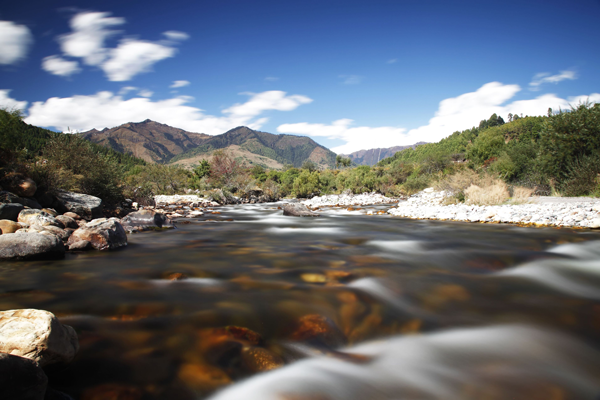
Tucked away from the monotonous chores of daily life faraway in the lap of the Eastern Himalayas is a fairy tale land. It is called Druk Yul or the Land of the Thunder Dragon, better known to the world as Bhutan.
As an exemplar tourist destination, this little Himalayan Kingdom has its own unique specialties. Here the Land, the Nature and the People have blended to a perfect harmony that indicates Peace, Tranquility and Depth.
For the traveler in quest for peace, tranquility, inspiration and enchantment Bhutan is the perfect answer. Here amidst monasteries, fluttering prayer flags, friendly people, pristine scenery, running streams, green valleys, lakes and awe inspiring architecture the traveler wakes up to a deep and pleasant realization that his inward journey has been as much valuable as his outward trip.
Nature in Bhutan has an amazing diversity. Be it fiery rhododendrons galore in the months of spring or expanse of blue poppies in rolling fields, the beauty is simultaneously pristine and primeval. Rich flora and fauna are yet to be explored. The Bhutanese traditional reverence for nature has delivered the country into the third millennium with its environment – both natural and popular – still richly intact.
All tours to Bhutan are regulated by the Government and you will need to book through a licensed travel agent for all trips to Bhutan.
More Information About Bhutan
Best season: March, April, May, September, October and November.
Monsoon: June, July and August
Winter: December, January and February.
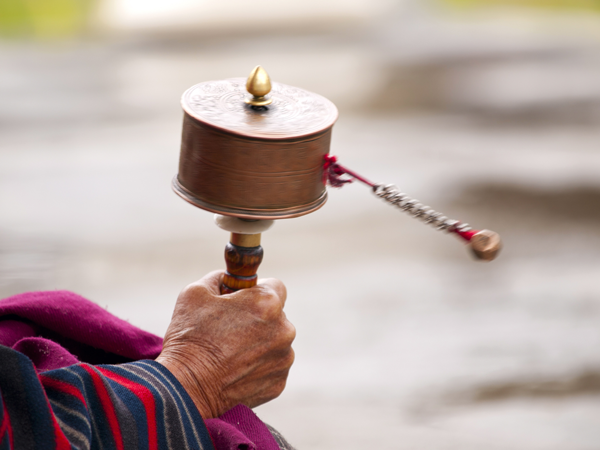
Festivals or Tsechus in Bhutan are religious events. All the festivals in Bhutan share the same theme, but each festival has its own special flavor. Different locals and venues provide a kaleidoscope of sight and sound. During the mask dances, the deities of the tantric teachings are invoked and through their power and blessings, misfortunes are removed, good luck is increased, wishes are fulfilled and sins are removed.
Dress Code
Since this is one occasion where all Bhutanese dress in their finest clothes, it is appropriate for visitors to be dressed formally. Inside Dzongs and monasteries, hats are not permitted as a rule. Full sleeved shirts and full trouser would suffice for men, the same or dress for women. Ties are not necessary, jackets optional.
Key Festivals (2011)
Punakha Tsechu 13 – 15 Feb
(Punakha)
Talo Tsechu 13 – 15 Mar
(Punakha)
Paro Tsechu 15 – 19 Mar
(Paro)
Domkhar Tsechu 12 – 14 May
(Bumthang)
Ura Yakchoe 14 – 17 May
(Bumthang)
Thimphu Drubchen 1 – 5 Oct
(Thimphu)
Wangdue Tsechu 4 – 6 Oct
(Wandue Phodrang)
Gangtey Tsechu 4 – 6 Oct
(Wandue Phodrang)
Thimphu Tsechu 6 – 8 Oct
(Thimphu)
Jakar Tsechu 3 – 6 Nov
(Bumthang)
Jambay Lhakhang Drup 10 – 14 Nov
(Bumthang)
Black Necked Crane Festival 11 Nov
(Wandue Phodrang)
Nalakhar Tsechu 10 -12 Dec
(Bumthang)
The above are some key festivals which are accessible for most tourists. You will need more days for festival viewing in Bumthang due to its central location.
We customise all Festival itineraries to include tour or trek as per your request. We can assist to check the Festival calendar if you have specific travel date to Bhutan and would like to view a festival.
Travel Information
1. Airport Check-In
Always arrive at the airport 2 hours before departure time to facilitate check-in.
2. Passport
An international passport with a minimum validity of 6 months from the date of arrival into Bhutan is required.
3. Visa
Bhutan does not issue visas outside the country. You need to provide us (the tour agency) a clear scanned copy of your passport details with photo by email at least 2 months ahead. We will obtain the “visa clearing number” from the Foreign Ministry. It is impossible to board the flight (Druk Air) if this procedure has not been completed beforehand. The visa is stamped in the passport upon arrival at Paro Airport or Phuentsholing border post and costs US$20, included in your package, one passport-sized photo is required as well. We advise that you bring additional photos just in case.
4. Time
Bhutan is 1h 55 min behind Singapore time.
5. Vaccination
Vaccination is recommended prior to the trip. You can consult your family doctor or visit the nearest clinic in your neighbourhood for consultation at least a month before your trip if you confirm your trip early. There is also a travel clinic at Tan Tock Seng Hospital.
6. Currency
The Ngultrum is the currency of Bhutan. It is equivalent to the Indian rupee which is widely accepted through out Bhutan. The exchange rate is estimated at SGD1 = 33 Nu, subject to fluctuation. You can buy ngultrum at the Paro airport, Bhutan National Bank and the Bank of Bhutan. You can also buy at all hotels but the exchange rate is slightly higher than banks. You are advised to bring in traveler’s checks or cash dollars which are widely accepted. Credit cards are still in little use. Visa and American Express cards are accepted in only a few stores in Thimphu and it is not possible to withdraw money with international cards.
7. Custom
The export of antiques, plants, flowers, butterflies, animal products, religious objects ( statues, prayer wheels, reliquaries, bells, vajra is prohibited. It is best to avoid problems and not buy these items in Bhutan.
8. Electricity
The power supply is 220volts in the big cities. Normal outlets are for plugs with 2 rounded prongs. We suggest that you bring along a multi-purposed plug available in all electrical shops. Do note that blackout can be common in the city and outskirts. Do bring along a torchlight for emergency case.
9. Climate
Best season to travel: Sept – May Monsoon: Jun – Aug Winter: Dec – Feb
10. Clothing
For touring and sightseeing, lightweight comfortable casual clothing is recommended. Do not bring any revealing or tight-fitting clothes as Bhutanese are generally conservative. Do keep in handy an umbrella, a hat, sunblock lotion and sunglasses. Warm clothing or a light jacket for night is recommended. As there will be a lot of walking during tours, you are advised to bring a pair of flat, comfortable walking shoes. For trekkers, a packing list guideline will be sent to you.
11. Hotel Facilities
Generally air-conditioner, television, in-room movie channel & free coffee/tea making facility are available in the hotel rooms. All beverages consumed from the mini bar is at personal expense. Most hotels in the city have internet facilities in their business centre which are chargeable.
12. Hot Shower
Hot shower is available in majority of the hotels in the city and outskirts. However, it is possible that hot water may not be available at times due to temporary electricity supply cut-off. Hence, do not panic and do approach your guide if you need help. If the water is too cold for shower, it is advisable to do a simple clean-up instead using wet towel.
13. Communications
There are Internet cafes in Paro, Thimphu, Bumthang and access in major hotels across the country. Mobile coverage is extensive but due to oversubscription, you may have problems calling out from Bhutan.
14. Shopping
Bargaining is NOT a custom in Bhutan so you cannot hope to get more than a ten per cent reduction. Bhutanese handicrafts are not oriented to the tourist market, thereby remaining authentic and they are relatively expensive. Today, however, small souvenirs made of traditional materials are produced for the traveller. If you see something you like, you should buy it immediately because stocks do not exist.
15. Tipping & Porterage
Tipping is a common practice while you are on a tour. It is always a good gesture and customary to tip the coach driver and the local guides. Guideline for tipping is SGD3/day for tour guide and SGD2/day for driver for each passenger on leisure tours. For trekkers, the guideline for tipping is SGD8/trek day for chief guide/cook, SGD4/trek day for assistant guide and SGD3/trek day for each porter/helper. For group trekkers (2 pax or more), the total sum is divided among the members. For individual trekkers, you bear the entire sum. Please note this is just a guideline.It is entirely up to each individual to decide how much they want to tip as experiences may vary.
16. Food & Beverage
Any changes in diet can have an effect but a few simple precautions should prevent any problems stemming from food or drinks. Tap water is NOT drinkable in Bhutan. It is safe to drink only mineral water from sealed bottle or from the boiled water supplied in your room. When eating in Bhutan, you should like hot, spicy food, meat fat and dried meat. There are many vegetable dishes that do not contain the last two ingredients though hot chilli peppers are found in many of them. A typical Bhutanese meal consist of a mountain of rice and two or three dishes with various stews. The favourite meats of northern Bhutanese are yak and pork. Beef and chicken are the second choice. That said, various cuisine such as Nepali, Indian, Chinese Western and continental are available in some hotels or within the city.
17. Language
Three major languages are spoken in Bhutan, namely: Dzongkha, Sharchopkha and Nepali. Dzongkha is mainly spoken in the west, Sharchopkha in the east and Nepali in the south. Dzongkha is the national language of Bhutan. It has some similarity to Tibetan in speaking, while the alphabets are exactly same as Tibetan. If you can speak English, you should not have much problem communicating in Bhutan. If you are in a town, you will see that almost everybody can speak English. However, if you go to remote villages, it will be helpful if you can speak little bit of Bhutanese. Here are a few important sentences in Dzongkha that may be helpful:
1. Hello (or greetings). Kuzu Zangpo.
2. How are you? Ga de bay ye?
3. What is your name? Chhoe gi ming ga chi mo?
4. My name is Peter. Nge gi ming Peter in.
5. Where is the toilet? Chhabsang ga ti mo?
6. Thank you. Kadrin chhe.
18. Culture
With its diverse ethnic groups and traditional beliefs, Nepal has numerous cultural practices that may appear unusual to a person on his/her first visit to the country. However, to enjoy your stay in this remarkable country of White Himalayas and sparkling rivers, it is important to take into consideration the different cultural aspects of the country. Here is a list of things that may be helpful to you:
• Bhutanese people have a distinct manner of greeting people, sometimes with a slight nodding of the head or bowing slightly if we meet older, senior people.
• Guests are encouraged to observe the local etiquette and not to talk too loudly when meeting Bhutanese.
• A nod of the head is also appreciated when meeting people, particularly in villagers and towns outside Thimphu.
• Intimacy in public is generally not appreciated.
19. Photography
Bhutan is perhaps one of the most photogenic places in the world. The landscape, nature, architecture and the people make it a photographer’s paradise. People are generally happy to pose for pictures, but do ask before you do so if you are focusing on one person. Photography is not permitted inside Dzongs, monasteries and temples as they are considered living institutions. You could use your video camera for recording your events during the tours (except in
those restricted places mentioned) but there is a set of rules for the commercial filming. Films and camera batteries are available generally only in major towns.
Last but not least, remember that you are traveling to a foreign country that has a different lifestyle, culture and customs. Do set your expectations right and embrace this difference with an open-mind. Do keep a traveler’s integrity and have a good sense of humour. You will definitely find your journey enriched by the hospitality of the Bhutanese, their simple lifestyle and their rich heritage and culture!
Disclaimer:
The above info serves only as a guideline and is subject to changes. Divine International Explore & Treks will not be held responsible for misinformation or omission intentionally or otherwise. All information are subjected to changes without prior notice. For more information, please check out travel literature or websites.
Tours
07 Days Discover Bhutan Tour
08 Days Mystical Bhutan & Nepal Tour
10 Days Cultural Bhutan – Nepal Experience
13 Days Sikkim Bhutan In Depth
13 Days Eastern Himalayan – Bhutan, Darjeeling & Sikkim
Treks
10 Days Bhutan Bumdrak Trek with Cultural Tour
11 Days Gasa Hot Spring Trek & Culture Tour
11 Days Samtegang Trek & Cultural Tour
12 Days Bhutan Druk Path Trek with Cultural Tour
12 Days Bhutan Chelila Nature Trek with Cultural Tour
12 Days Bhutan Drakey Pangtso Trek with Cultural Tour
14 Days Dagala Thousand Lakes Trek
14 Days Punakha Winter Trek
15 Days Bumthang Cultural Trek
Check back for more, or sign up for our newsletter for the latest updates!